
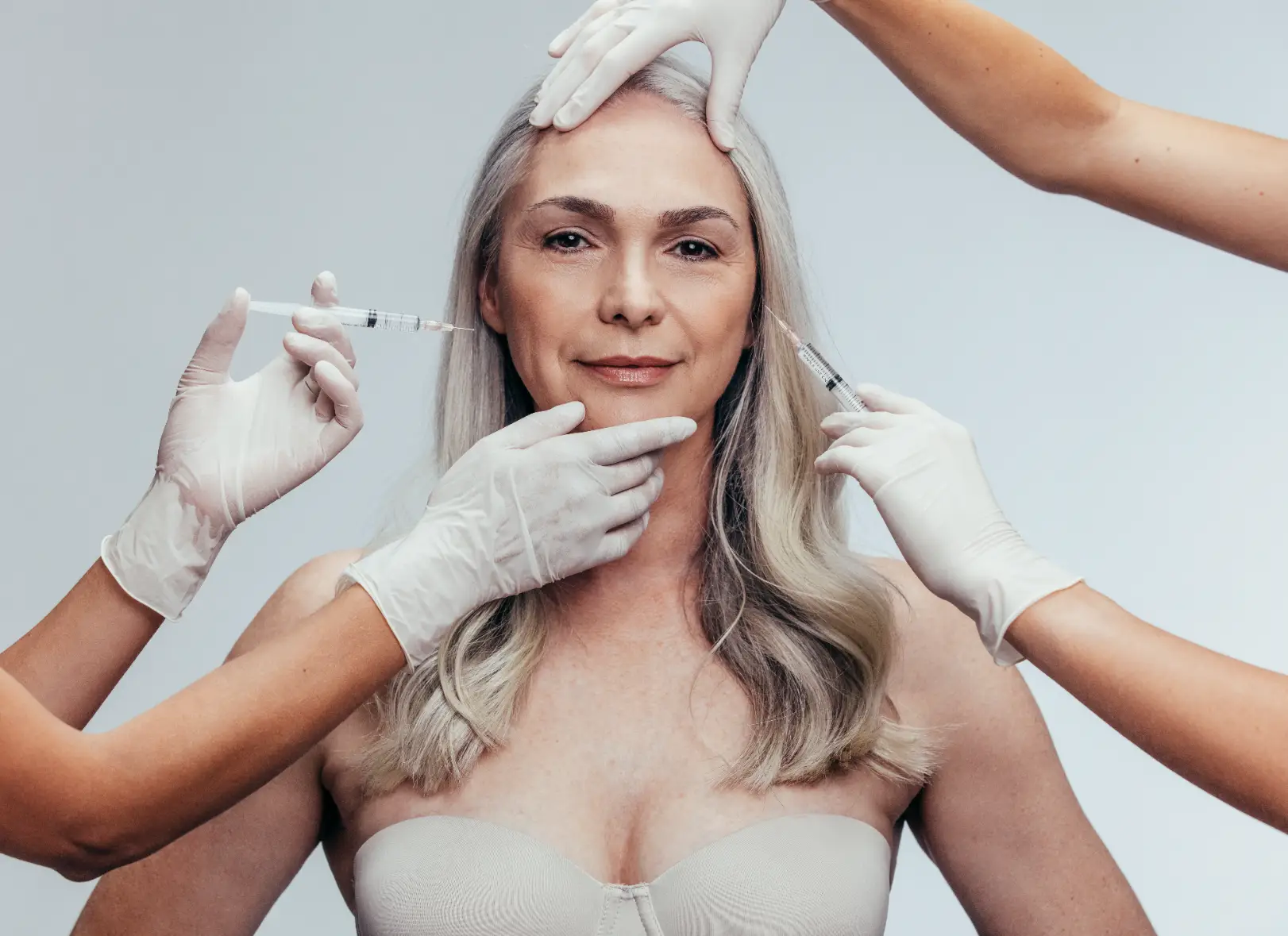
Skin aging doesn’t follow one neat pattern. Some people notice their cheeks looking flatter, while others feel their skin has gradually lost some of its firmness and resilience. Often, both changes are happening at once.
That’s why injectable treatment isn’t simply a matter of deciding that you “need filler.” Biostimulators and dermal fillers can both play valuable roles, but they approach facial aging in distinctly different ways.
Fillers primarily add volume beneath the skin, while biostimulators encourage the body’s own collagen production to support structure and skin quality gradually. Neither approach is automatically better.
The right choice depends on what has changed, what you’d like to improve, and how quickly you want to see that improvement. Continue reading to understand the biostimulator vs. filler conversation and which approach may better match different aesthetic goals.
How Biostimulators and Fillers Really Differ
Both treatments involve injectables, which can make them seem more similar than they actually are. Their purpose, timeline, and ideal patient can differ considerably, so understanding those distinctions makes treatment decisions much easier.
1. Fillers Add Volume Directly
Dermal fillers do exactly what their name suggests: they fill. An injectable gel is placed beneath the skin to restore selected areas of volume loss, soften certain lines, or refine facial contours and proportions. That makes filler particularly useful when the problem is structural.
A patient may have gradually lost fullness through the cheeks, for example, or naturally have a chin that doesn’t project as much as they’d like. Carefully placed filler can add support in those areas without waiting months for the body to generate the change.
This is one reason patients seeking dermal filler in Miami may appreciate its relatively immediate nature. Although swelling can temporarily affect how an area looks after treatment, the product itself provides volume from the time it’s placed.
Still, filler shouldn’t be viewed as a universal solution for aging. If the real concern is declining skin quality rather than a specific volume deficit, repeatedly adding gel may not address what the patient actually wants to improve.

2. Biostimulators Work More Gradually
Biostimulators take a different approach. Instead of focusing primarily on immediate gel-based correction, these injectable treatments are designed to encourage the body’s own collagen production over time.
That makes patience part of the process. First Class Health describes biostimulator treatments as supporting skin structure and quality gradually, often over a series of sessions. The change isn’t intended to appear as though significant volume suddenly arrived overnight.
This gradual response can appeal to patients who want their appearance to evolve more subtly. Rather than seeing an obvious difference immediately after one appointment, they may notice progressive changes as collagen remodeling develops.
For someone considering a collagen stimulator in Miami, that timeline is worth understanding before treatment. Biostimulators aren’t simply slower fillers. Their mechanism and aesthetic purpose are different, which is exactly why they can occupy a different place in an injectable plan.
3. The Starting Problem Matters
The easiest way to think about candidacy is to begin with the problem rather than the product. Ask what has actually changed about the face. Facial volume loss can happen as part of aging because the face changes at multiple levels. Fat compartments, bone, ligaments, skin, and other structures all contribute to the way facial contours evolve.
If a specific area needs direct volume or contour refinement, filler may make sense. If the larger concern is gradual loss of structural skin quality and the patient prefers a collagen-focused strategy, a biostimulator may be considered instead. That distinction prevents every aging concern from being treated as though it’s simply an empty space that needs filling.
Some patients have both issues. They may benefit from direct structural support in one area and a collagen-stimulating approach elsewhere. A good treatment plan doesn’t force every concern into the same category simply because one injectable happens to be popular.
4. Their Timelines Feel Different
Timing is one of the biggest practical differences between these treatments. Filler is often chosen when a patient wants to see a visible structural change relatively quickly. Biostimulators require a longer view.
Because the goal is to stimulate a biological collagen response, improvement develops as the body responds to treatment. That makes biostimulators particularly compatible with gradual facial rejuvenation.
Imagine someone who doesn’t want friends or coworkers asking, “What did you have done?” That patient may appreciate changes that emerge slowly rather than an immediate increase in facial volume.
Another patient may be preparing for an event and wants a specific contour refined sooner. Depending on the area and their candidacy, filler may better match that timeline. Neither preference is wrong.
The important part is discussing timing before treatment. Choosing a biostimulator while expecting tomorrow’s result can lead to disappointment, just as choosing filler when you specifically want slow collagen-focused change may not match your priorities.
5. Sculptra Isn’t Conventional Filler
The Sculptra vs. filler comparison comes up frequently because Sculptra is injectable and can ultimately contribute to a fuller, more supported appearance. However, it doesn’t behave like a conventional hyaluronic acid filler.
Sculptra contains poly-L-lactic acid, or PLLA. Its aesthetic effect develops primarily by stimulating collagen production after treatment rather than simply functioning as a traditional volumizing gel that stays where it’s injected.
That distinction changes the treatment experience. Sculptra results develop progressively, and treatment commonly involves more than one session depending on the individual plan. The initial appearance immediately after treatment shouldn’t be mistaken for the final collagen-related result.
Traditional fillers can offer more immediate contour or volume correction. That can make them useful when precision in a particular area is the priority. Sculptra may be considered when the broader objective is progressive collagen support rather than simply filling one isolated crease.
Calling one “better” misses the point. They’re different tools built for different jobs.
6. Skin Quality Can Guide the Choice
Sometimes patients arrive saying they look tired but can’t identify one feature that’s bothering them. Their cheeks aren’t necessarily hollow, and they don’t want larger lips or a sharper chin. Their skin simply doesn’t feel as resilient as it once did. That conversation can point beyond conventional volume replacement.
Collagen contributes to the skin’s structural support, and natural collagen production changes with age. Biostimulators are designed around encouraging collagen production, which can make them worth discussing when the goal centers on gradual structural quality. Filler doesn’t stimulate the same process simply because it’s injected under the skin.
Its main job is adding volume, supporting tissue, softening selected lines, or changing contour depending on the product and placement. That’s valuable when volume is actually what the face needs. This is why evaluating the skin itself matters.
Someone who needs volume shouldn’t be talked out of filler simply because collagen stimulation sounds more natural. Likewise, someone focused on skin quality shouldn’t automatically receive filler because it’s the more familiar injectable. The concern should choose the tool, not the trend.
7. Facial Shape Can Favor Filler
Some aesthetic concerns are fundamentally about shape. Chin projection, cheek contour, and selected areas of facial balance may require physical volume in a precise location. Dermal fillers are particularly useful in this context because different products can be selected and placed strategically based on the treatment area and goal.
The amount matters just as much as placement. Facial balancing doesn’t require filling every area. Sometimes a relatively small structural adjustment can change how neighboring features are perceived.
For example, adding appropriate chin projection may improve the relationship between the lower face and profile. Carefully planned cheek treatment may restore selected support without trying to make the cheeks dramatically larger. This is where restraint becomes part of good filler treatment.
If facial volume loss is approached by continuously adding product without considering proportions, the face can eventually look heavier rather than younger. Restoring what has changed isn’t the same as creating as much volume as possible.

8. Biostimulators Suit the Long View
Some patients aren’t looking for a quick correction before next month’s event. They’re thinking about how their face will age over the next several years and want a treatment strategy centered on progressive support. Biostimulators can fit naturally into that mindset.
Because their effects depend on the body’s collagen response, they invite patients to think about aesthetic care as a process rather than a single reveal. That doesn’t mean collagen stimulation permanently stops aging or eliminates the need for future treatment. The face will continue changing.
Genetics, sun exposure, lifestyle, hormones, and normal aging continue to influence the skin. Biostimulators work within that reality rather than freezing the face at a particular age.
For the right patient, that can make gradual facial rejuvenation especially appealing. Improvement doesn’t have to mean looking dramatically different. It can mean supporting the face in a way that still feels familiar when you look in the mirror.
Choose What Your Face Needs
Sometimes the answer is volume. Sometimes it’s collagen support, and sometimes the best plan uses neither until the concern has been evaluated more carefully. Biostimulators offer a gradual approach centered on stimulating collagen production, while dermal fillers provide direct volume and contour where it’s appropriate.
At First Class Health, patients considering a collagen stimulator in Miami or dermal filler can explore an individualized approach based on facial structure, skin quality, volume changes, and personal goals.
By choosing the treatment for the problem rather than following an injectable trend, the focus stays where it belongs: creating thoughtful, natural-looking changes that still feel like you. Contact us today to book your appointment!